


WAR, PROTRACTED CONFLICTS AND INTERNATIONAL DISPUTES IN CONTEMPORARY WORLD
Estudios Globales / Global Studies
Curso 2026/2027
1. Subject Information
(Date last modified: 29-05-26 10:25)- Code
- 140527
- Plan
- 405
- ECTS
- 6.00
- Type
- Opcional
- Year
- 4
- Duration
- Second semester
- Language
- ENGLISH
- Area
- CIENCIA POLÍTICA Y DE LA ADMINISTRACIÓN
- Departament
- Derecho Público General
- Virtual platform
Professor Information
- Profesor/a
- Angela Suarez Collado
- Group/s
- sin nombre
- Centre
- Fac. Derecho
- Office
- 209
- Office hours
- By appointment
- Web address
- https://produccioncientifica.usal.es/investigadores/58040/detalle
- ascollado@usal.es
- Phone
- Ext. 1616
2. Association of the subject matter within the study plan
3. Prerequisites
N/A
4. Learning objectives
The main objective of the course is to provide students with an overview of the main concepts and theories related to war, conflict, and international disputes. Through comparative case studies the course will also help the students to critically evaluate the role of states, regional powers, international organizations, and non-state actors in shaping conflict and cooperation in the contemporary international system
5. Contents
Theory.
Part 1: WAR
- Introduction to War and International Conflict
- Regional Powers and Proxy Wars
- Case Studies: Yemen and Libya.
- Civil Wars and State Fragility
- Case Studies: Syria, Sudan.
PART 2: PROTRACTED CONFLICTS
6. Causes of Protracted Conflicts
7. Case Studies: Western Sahara.
8. Mediation, Negotiation and Peace Processes
9. Case Study: Northern Ireland
PART 3: INTERNATIONAL DISPUTES
10. International Disputes and Resource Conflicts
11. Case Study: South China Sea.
12. Transboundary Waters and Environmental Security
13. Case Studies: Jordan, Orontes and Litani Rivers
Practice.
- Debates and news analysis.
- Critical discussion on documentaries, films and academic papers.
3. Active learning activities
6. Competences acquired
Basic / General.
Ability to reflect on political issues
Ability to analyze empirical information
Ability to link empirical analyses and normative reflections
Writing skills
Ability to present ideas and debate on them
Specific.
Analysis of current geopolitical conflicts
7. Teaching methods
Lectures
Presentations
Debates
Essays
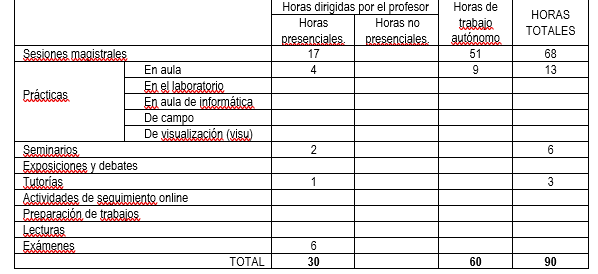
8. Anticipated distribution of the use of the different teaching methods
9. Resources
Reference books.
They will be provided in the presentation of the course
10. Assessment
Assessment criteria.
Two assessment systems.
- Continuous assessment through practical exercises (100% of the final grade)
- Non continuous assessment: exam (100% of the final grade)
Assessment recommendations.
|
Recomendaciones para la recuperación. |
|
The requirements will be the same for the second round of evaluations. |