


Minorities and Global Politics Ethnicity, race and religion
Estudios Globales / Global Studies
Curso 2026/2027
1. Subject Information
(Date last modified: 04-06-26 13:10)- Code
- 140537
- Plan
- 405
- ECTS
- 6.00
- Type
- Opcional
- Year
- 4
- Duration
- First semester
- Language
- ENGLISH
- Area
- CIENCIA POLÍTICA Y DE LA ADMINISTRACIÓN
- Departament
- Derecho Público General
- Virtual platform
Professor Information
- Profesor/a
- Daniel Guerra Sesma
- Group/s
- Único
- Centre
- Fac. Derecho
- Office
- Planta Jardín
- Office hours
- By appointment
- Web address
- http://campus.usal.es/~acpa/
- danguerra@usal.es
- Phone
- -
- Profesor/a
- Hugo Marcos Marné
- Group/s
- Único
- Centre
- Fac. Derecho
- Office
- 166
- Office hours
- By appointment
- Web address
- https://produccioncientifica.usal.es/investigadores/107738/detalle
- marcosmarne@usal.es
- Phone
- Ext 6399
- Profesor/a
- Marta Seijas Blanco
- Group/s
- Único
- Centre
- Fac. Derecho
- Office
- Planta Jardín
- Office hours
- Appointment by email
- Web address
- https://produccioncientifica.usal.es/investigadores/1229565/detalle
- martaseijas@usal.es
- Phone
- -
2. Association of the subject matter within the study plan
3. Prerequisites
No prior knowledge or specific prerequisites are required.
4. Learning objectives
To consider different sources of diversity within contemporary societies.
-To understand the nature of nations, nationalism, and ethnicity in contemporary social theory.
-To consider how different patterns of race and ethnic relations emerge in multiethnic societies.
-To learn about different institutional designs that allow dealing with diversity.
- To analyze the role of political institutions and public policies in shaping the inclusion or exclusion of minority groups.
- To evaluate contemporary case studies of minority politics and conflict from a global comparative perspective.
5. Contents
Theory.
Module I (Prof. Hugo Marcos-Marta Seijas):
- Heterogeneity and diversity around the world
- Social identities and their political implications
- Multiculturalism
- Ethnocultural identities and political behavior: voting and beyond
- Migration, minorities, and political backlash
- Public attitudes toward minorities
Module II (Prof. Daniel Guerra):
- Nationalisms in the global context
- Federalism in contexts of national diversity.
Irredentism and secessionism
6. Competences acquired
Basic / General.
CB3, CB5, CG1, CG4
Specific.
CE7, CE13, CE20
Transversal.
CT1, CT5.
7. Teaching methods
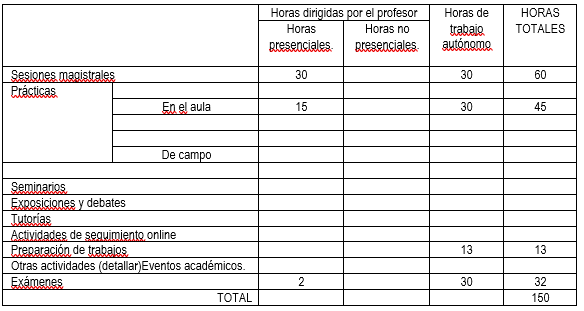
This course combines theoretical and practical sessions.
8. Anticipated distribution of the use of the different teaching methods
9. Resources
Reference books.
Bernai, G., Trimble, J. E., Burlew, A. K., & Leong, F. T. (2003). Handbook of racial & ethnic minority psychology. SAGE Publications.
Buchanan, Allen E. (1991). Secession. The morality of Political Divorce from Front Sumter to Lithuania and Quebec. Westview Press.
Buchanan, Allen E. (2014). Autodeterminación y secesión. Tensiones y conflictos en torno al nacionalismo. Gedisa.
Gellner, E. (2006). Nations and Nationalism. Blackwell Publishing Ltd.
Jackson-Preece, Jennifer. (2016). The Routledge Handbook of Ethnic Conflict. New York: Routledge.
Linder, Wolf and Mueller, Sean (2021). Swiss Democracy Possible Solutions to Conflict in Multicultural Societies. New York: Palgrave McMillan.
Ratuva, Steven. (2020). The Palgrave Handbook of Ethnicity. Singapore: Palgrave McMillan.
Scott, K. (2011). Federalism: A Normative Theory and its Practical Relevance. Continuum.
Wheare, K. (1946). Federal Government. Oxford University Press.
Other bibliographic references, electronic or other types of resources.
A complete list of articles will be uploaded to Studium at the beginning of the course.
10. Assessment
Assessment criteria.
|
Consideraciones Generales |
|
The two modules will be assessed independently. The final grade will be calculated as a weighted average: Module 1 (66%) and Module 2 (33%). |
|
Criterios de evaluación |
|
Module 1:
Module 2:
|
Evaluation systems.
Module 1:
- Participation record
- Submission and assessment of practical exercises
- Group work rubric
Module 2:
Multiple choice exam
Assessment recommendations.
|
Recomendaciones para la evaluación. |
|
Attending theoretical sessions is recommended. Practical assignments account for a relevant part of the final mark in module I. Participating in and completing all practical exercises is advised. |
|
Recomendaciones para la recuperación. |
|
Continuous assessment components (e.g., participation, exercises, and coursework) are not eligible for resubmission or reassessment. |